The Highway That Actually Divides Bridgehampton From Water Mill
September 17, 2026
September 17, 2026
A couple from Carroll Gardens spent the summer of 2024 renting a house on Parsonage Lane in Bridgehampton for $45,000. They had planned to buy oceanfront, the way most first-time Hamptons buyers assume they should. By September they had a different answer. The rental taught them that their actual life, the one with early dinners and quiet mornings, fit better a mile inland than it did two blocks from the water. In 2025 they closed on a house on Hayground Road for $3.8 million.
That story matters more than any single median price you will find for Bridgehampton or Water Mill, because it points to the fact both villages share a quirk almost no listing site explains clearly: the number quoted as "the median" depends entirely on which side of a road the sample happens to fall on.
Montauk Highway, also known as Route 27, runs through Bridgehampton and splits it into two markets that share a zip code and not much else.
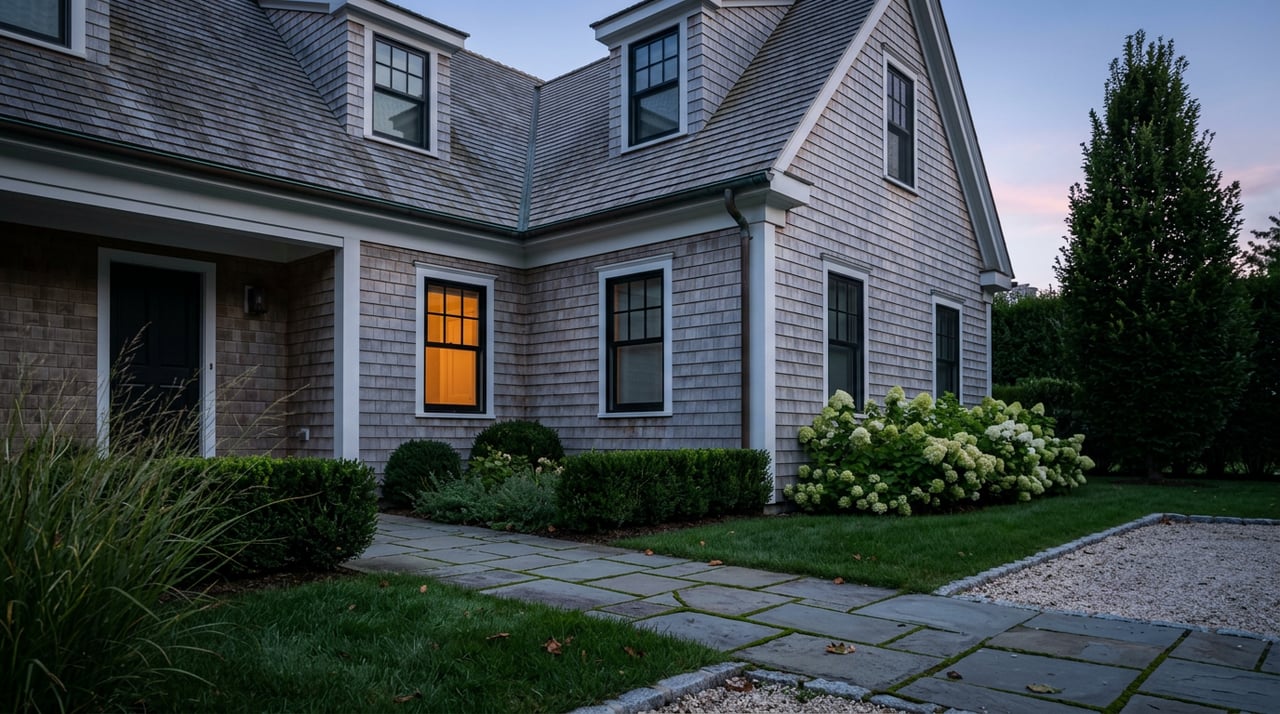
North of the highway you find older cottages and modest two to four bedroom houses on smaller lots. Buyers here tend to be creatives, remote workers, and young families making a permanent move out of Brooklyn or lower Manhattan. At this price tier, Bridgehampton competes directly with Sag Harbor and parts of East Hampton for people buying their first Hamptons home, and inventory here moves quickly whenever it appears.
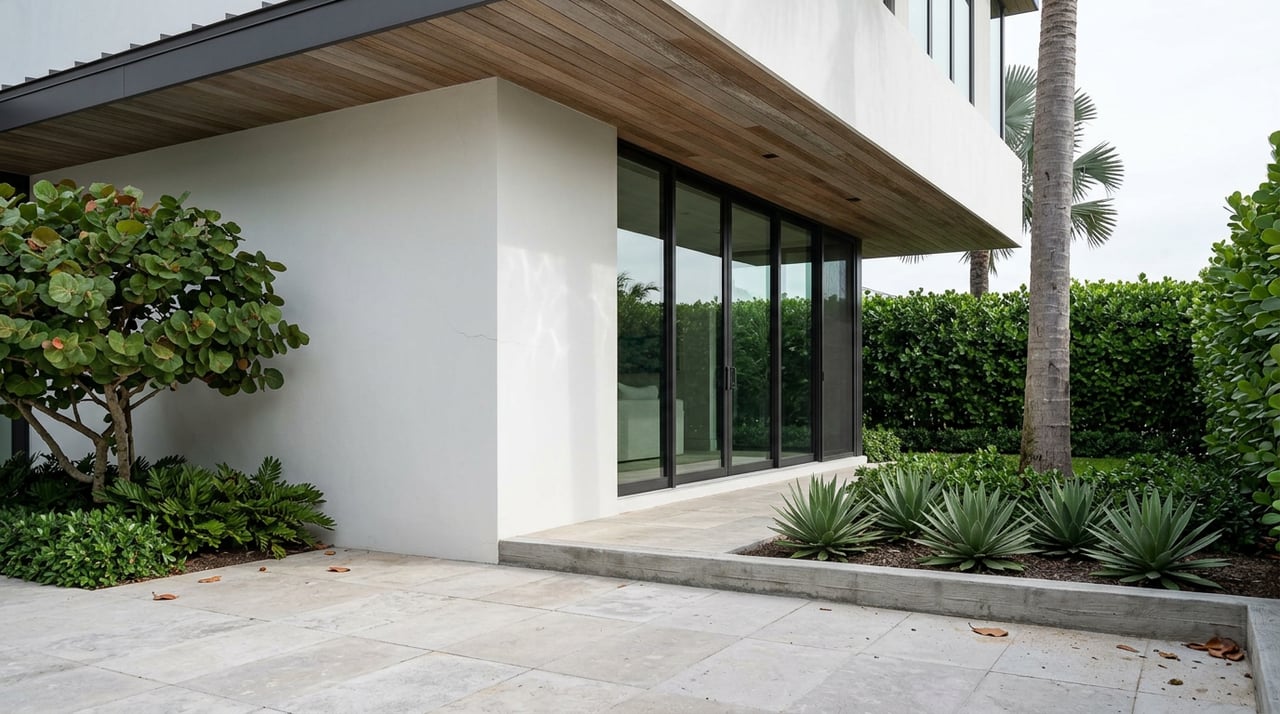
South of the highway is a different proposition entirely. Larger parcels, estate-scale construction, reserve views, and walking or biking access to Mecox Beach and Sagg Main Beach. Prices start around $4 million and climb without a visible ceiling. A 3.7-acre parcel on Ocean Road sold for $15.1 million in November 2025. A developer named Joe Farrell sold an oceanfront spec house south of the highway for $58 million, one of the priciest closings on the East End that year.
In between sits the tier where most of the actual volume happens: renovated or newer construction, four to six bedrooms, pools, some reserve or field views. This is where finance professionals, founders after a liquidity event, and Manhattan families committing to year-round residence are shopping. Properties in this band average 40 to 115 days on market, a wide range that itself tells you the segment isn't uniform.
Here is roughly how the three tiers break down:
| Segment | Typical price | Typical buyer | Days on market |
|---|---|---|---|
| North of the highway | Under $2 million | First-time Hamptons buyers, remote workers, young families | Fast when available |
| Mid-tier, both sides | Where the Bridgehampton median sits | Finance professionals, founders, year-round Manhattan families | 40 to 115 days |
| South of the highway | $4 million and up, no ceiling | Estate buyers, second and third home owners | Varies widely by size |
Bridgehampton's overall median lands around $3 million, but that number is an average of two markets that behave nothing alike. A buyer comparing "Bridgehampton" to another village on a single median is comparing an average of a cottage and a compound.
Water Mill sits next door, culturally close to Bridgehampton and geographically close to Southampton, and it posted a median around $5.5 million in 2025, putting it behind only Sagaponack among the most expensive zip codes in the Northeast. The Parrish Art Museum and Duck Walk Vineyards both sit within Water Mill, giving it an institutional identity Bridgehampton's newer clubs haven't matched yet.
The reason Water Mill's median runs so much higher than Bridgehampton's isn't that the villages are fundamentally different in character. It's that Water Mill doesn't have an equivalent to Bridgehampton's north-of-the-highway tier. There is no comparable stock of modest, under $2 million cottages pulling the average down. Water Mill's inventory skews toward the estate scale from the start, which is exactly why buyers who want Bridgehampton's accessibility without Sagaponack's price ceiling land there.
That difference in composition, not some difference in desirability, is what produces the gap between the two medians.
If you start pulling market data on either village, you'll notice the figures don't line up cleanly across sources, and that's worth understanding rather than ignoring. A typical home value calculation for Water Mill, which averages across all homes in the area regardless of whether they're currently for sale, comes in well below the $5.5 million figure quoted for homes actually listed or sold in a given month. The gap exists because the two numbers are measuring different things: one is the value of the housing stock as a whole, the other is whatever slice of inventory happened to transact or get listed that month.
Bridgehampton shows the same pattern in miniature. In a market this thin at the top end, a single sale can swing a monthly median dramatically, because the sample size some months is genuinely just a handful of closings. That's not a flaw in any one source. It's a structural feature of a market where the most expensive transactions are also the rarest.
This is the broader story that played out across the Hamptons in late 2025, and it's still the right lens for reading either village's numbers now. Douglas Elliman and Miller Samuel reported a record median sale price of $2.34 million for the fourth quarter of 2025, up 34 percent from the year before, with the number of homes selling above $5 million hitting a record 82 in that same report. Jonathan Miller, the report's author, was clear about what was actually driving the number.
"It's not price appreciation, but a shift to the higher-priced home sales."
That distinction applies directly to Bridgehampton and Water Mill. When more of the transaction volume shifts toward the top of the market, the median rises even if no individual house is worth more than it was a year earlier. Reading a single median as a verdict on a village's momentum, without asking which tier is doing the transacting, will mislead you every time.
The Carroll Gardens couple's path from a Parsonage Lane rental to a Hayground Road purchase is a useful template because it demonstrates something the listing photos can't. Renting north of the highway for a season let them test whether their real rhythm was a morning coffee routine near town or a Saturday at the beach club. They discovered the former mattered more, and it saved them from buying south of the highway on the assumption that oceanfront was the whole point of being in Bridgehampton.
That kind of test is available to almost anyone considering either village. A rental season is cheaper than a wrong purchase, and it answers a question no spreadsheet can: which version of the village actually fits the life you're planning to live there, not the one you imagine from the listing.
South of the highway also carries a social calendar that doesn't exist north of it. Bridgehampton's newer private clubs, including The Bridge and Atlantic Golf Club, sit closer to the estate corridor, and this year's Polo Hamptons matches at 900 Lumber Lane ran on July 18 and July 25. For buyers weighing that kind of access against a quieter, less expensive footprint north of the highway, the decision has less to do with budget alone and more to do with which calendar they actually want to keep.
Is one side of the highway a better investment than the other? The research doesn't support a clean answer to that. South of the highway carries higher entry prices and a track record of large individual sales, including the $58 million Farrell property and a $15.1 million Ocean Road parcel. North of the highway carries faster turnover among buyers making a permanent move. Each side serves a different buyer, not a better or worse one.
Does Water Mill have anything like Bridgehampton's north-of-the-highway tier? Not in any meaningful way based on current inventory patterns. That absence is the main reason its median runs so much higher than Bridgehampton's overall figure, even though the two villages sit side by side.
Should I trust the median price I see on a portal? Treat it as a starting point, not a verdict. Ask which segment of the market produced that number and how many sales it was built on that month. In a market this thin at the top, a handful of closings can move the figure more than any real shift in value.
If you are weighing Bridgehampton against Water Mill, or trying to figure out which side of Montauk Highway actually matches how you plan to live, Adam Levitt can walk you through the current inventory on both sides of that line and help you request a market valuation before you commit to either one.
Stay up to date on the latest real estate trends.

He navigates the highly dynamic and competitive real estate market to offer luxury home buyers and sellers a seamless and stress-free experience in their endeavor to realize their set out real estate goals.