Highland Beach Finally Gets a Park. The Family It's Named For Doesn't Want It.
August 20, 2026
August 20, 2026
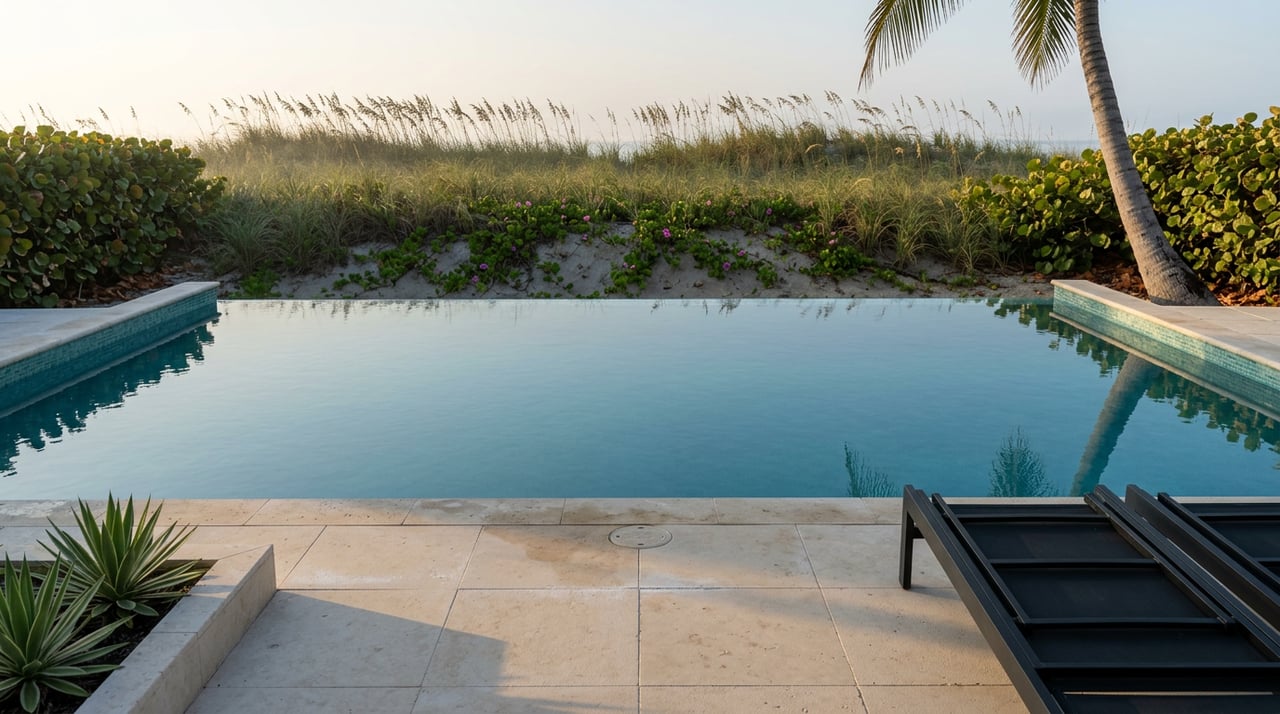
Every foot of oceanfront in Highland Beach sits behind a condo association gate, a private club, or a single-family lot line. The town has never had a public park. It has never had public beach access. For the roughly 4,300 residents spread along the town's stretch of A1A, the closest thing to a shared outdoor space has always been someone else's front yard.
That is finally changing, on paper at least. Palm Beach County filed permit applications in mid-April 2026 for Cam D. Milani Park, a 5.6-acre parcel straddling A1A at the south end of town, and county officials said at the time that construction could start as early as that June, with an 18-month build pointing toward a fall 2027 opening, according to reporting from The Coastal Star. Whether ground actually broke on schedule isn't something the public record confirms yet, but permits in hand is real progress after decades of nothing. That would be the first public park in Highland Beach's history. It would also, oddly, be a park that the family whose name it carries has spent the past year and a half actively trying to stop.
Highland Beach has spent decades organized around the idea that it doesn't need public infrastructure most towns take for granted. There is no commercial strip to speak of. Historically, the town's business directory has run to little more than a resort and a real estate office sharing the same address, according to Wikipedia's demographic summary of the town. Beaches are private. Parking is scarce by design.
The Milani parcel breaks that pattern because the town never actually owned it, and never got full control over what happened to it. Cam and Lucia Milani bought the land in 1974 intending to build 130 apartment units. The town fought it, litigation dragged on, and in 1987 Lucia Milani sold the parcel to Palm Beach County for $3.9 million with one condition: the county had to build a park and name it for her husband. That covenant, not a town vote or a zoning decision, is why this parcel has been sitting empty and contested for almost forty years while the rest of Highland Beach built out as an entirely private, entirely residential enclave.
The math on what that land is actually worth has become part of the fight. Highland Beach's Town Commission argued in 2024 that the parcel could be sold for close to $50 million, using that figure to push the county toward a sale instead of construction, according to the Palm Beach Post's coverage of the dispute. Against that number, the county's $8.6 million construction budget looks almost incidental. The real stakes here were never about the cost of a boardwalk and a lifeguard tower. They were about who gets to decide the highest use of the last open five and a half acres in a town built entirely on private lots.
For most of the past three decades, the pressure to build Milani Park came from the Milani family itself. They sold the land on the explicit condition that a park bearing Cam's name would be built. When the county delayed through the 1990s, then again after a 2010 settlement pushed construction out to 2020 with options to slide to 2025 or 2030, it was the Milanis pressing the county to honor the deal.
That changed in 2025. Cam Milani II, the son, wrote to county officials asking them to abandon the project entirely, or at minimum cut the planned parking from 100 spaces down to just 25. Lucia Milani testified in person at a county hearing, urging commissioners to listen to Highland Beach residents rather than push the park through as originally designed.
"We want to let the county know that we support the position of the Town."
That line, from Cam Milani II's letter to county officials, is the whole story in one sentence. The family that spent forty years insisting the county keep its promise is now aligned with the same Town Commission that spent forty years trying to block the promise from being kept. Neither side wants the park built the way the 2010 settlement describes it.
The numbers on parking tell you how much ground has actually shifted. The county's approved site plan called for 100 parking spaces on the west parcel alone. Late in 2025, the county agreed to a smaller Phase 1 of just 46 general spaces, a compromise the Coastal Star reported on when it covered the April 2026 permit filing. A separate town planning document from around the same period cited 38 spaces for that same phase. The exact number keeps moving, which is less a data error than a signal that this is still being negotiated in real time, even with permits already filed. The Milani family's ask, back in 2025, was to cut parking to just 25 spaces, or drop the project altogether. That sits well below either figure the county has floated, which tells you the family was never really negotiating over parking capacity. They were negotiating over whether the park should feel like a park at all, or something closer to a quiet, code-compliant afterthought.
Strip away the family drama and the county paperwork, and here is what residents near the south end of town can expect on the ground:
Given how many times this project has already missed its own deadlines going back to the 1990s, fall 2027 is a target, not a guarantee. But permits in hand is further than this project has gotten in over a decade, and it is the first time a construction start date has been attached to an actual filing rather than a settlement clause.
One detail that has gotten lost in the parking fight is what the county is actually trying to build on top of, historically speaking. The parcel includes a coral outcropping known as Yamato Rock, a gathering spot used in the early 1900s by the Yamato Colony, a community of Japanese immigrant farmers who settled the area, according to Palm Beach County's own public art solicitation for the project. The same document notes that the broader site includes indigenous burial grounds established more than a thousand years ago.
The county is folding that history directly into the park's physical design. A public art solicitation tied to the project, with artist proposals due in early February 2026, calls for imagery inspired by the site's coastal ecology and its layered cultural history to be etched, carved, and inlaid into the Accoya wood boardwalk railings and seat tops, per the county's call to artists. Whatever the final parking count ends up being, the park itself is being designed to acknowledge use of this land that predates the Milani family's 1974 purchase by centuries.
If your home or condo sits near the south end of Highland Beach, expect construction traffic and some parking disruption on both sides of A1A once ground breaks, whether that has already happened by the time you're reading this or is still ahead. The town's beaches will remain private through the build. What changes, assuming the fall 2027 timeline holds, is that Highland Beach stops being the rare coastal town with zero public outdoor space and becomes one with a single, modest, heavily negotiated exception to that rule.
Whether that shifts anything about how the town feels day to day is genuinely an open question, and one that even the family whose name is on the sign can't agree on.
Highland Beach's real estate market runs on the same qualities that made this fight take forty years: privacy, low density, and a town that has organized itself around keeping outsiders and infrastructure at arm's length. If you're trying to understand how a change like Milani Park fits into that picture, or how it might affect values or demand along the A1A corridor over the next few years, Adam Levitt tracks these local shifts as part of an ongoing, data-driven read on the Highland Beach market. Request a Market Valuation to talk through what's actually changing in your part of town.
Stay up to date on the latest real estate trends.
He navigates the highly dynamic and competitive real estate market to offer luxury home buyers and sellers a seamless and stress-free experience in their endeavor to realize their set out real estate goals.