Buying on the water in Manalapan should feel effortless from day one. Yet the dock that comes with a home can either unlock easy weekends on the Intracoastal or add months of permitting and surprise costs. If you plan to keep a boat at your back door, you need clarity on permits, lifts, depth, bridge access, and timelines before you write an offer.
This guide breaks down the essentials for waterfront buyers in 33462. You will learn what affects value and usability, who regulates dock work, how to assess physical constraints, and how to plan due diligence and construction with confidence. Let’s dive in.
Why dockage matters
Your dock determines the size and type of boat you can keep, how often you can launch, and how easily you reach open water. Depth at low tide, vertical clearances, slip length, and lift capacity all shape your day-to-day experience.
Dock condition and documentation also influence value. A permitted, engineered dock and lift typically increase marketability. Unpermitted or nonconforming structures can trigger title issues, higher insurance costs, or required remediation that slows or jeopardizes closing.
Timing matters. Seawall repairs, new lifts, or permit corrections can take weeks to months. If state or federal reviews are needed, expect longer timelines. Build these realities into your contract and closing plan so your boating season stays on track.
Permits and approvals
Multiple agencies touch waterfront work. Understanding roles helps you forecast time and risk.
- Town of Manalapan: Local zoning and building rules govern dock length, side setbacks, lifts, pilings, and seawalls. Expect local permits for new or rebuilt structures and potential proof of state or federal approvals before final issuance.
- Palm Beach County: County rules can apply for shoreline work and environmental considerations in certain areas.
- Florida Department of Environmental Protection (FDEP): Work waterward of the mean high water line or on sovereign submerged lands often requires state authorization and may involve an Environmental Resource Permit.
- South Florida Water Management District (SFWMD): May review dredging, filling, or alterations of surface waters and wetlands.
- U.S. Army Corps of Engineers (USACE): Section 10 and Section 404 reviews apply to work in navigable waters or dredge and fill activities. Some projects qualify for nationwide permits, while others require individual permits.
- Florida Fish and Wildlife Conservation Commission and U.S. Fish & Wildlife Service: Protections for seagrass, mangroves, and manatees can add conditions or seasonal limits.
- U.S. Coast Guard and NOAA: Navigation safety, charts, and bridge information inform clearances and routes.
Typical workflow and timing
Local review often starts with the Town of Manalapan to confirm zoning and building compliance. State and federal authorizations may be required, especially when work extends waterward of the mean high water line. If an established general permit covers your scope, approvals can be faster than an individual permit.
- Straightforward local replacements in non-sensitive areas can take weeks to a few months.
- Projects that involve state or federal review, dredging, or work in seagrass or manatee habitats can take months to a year.
- Public notice, neighbor comments, or mitigation needs can extend timelines.
What to request from the seller
Ask for documentation before you commit so you can confirm compliance and plan for upgrades.
- Permits and approvals for the dock, lift, and seawall, plus any sovereign submerged lands authorizations.
- As-built drawings, recent inspection reports, and repair records.
- A current survey showing the mean high water line and dock location.
- Title notes for recorded easements, riparian rights, or violations.
Physical constraints to evaluate
Manalapan’s setting on the Intracoastal Waterway is a gift, but every site has limits. Match the dock to your boat and route.
Depth and tide
Usable depth at mean low water is your baseline. Tidal range and seasonal variation affect when you can depart and return. Silting or shoaling can reduce depth over time and often requires permits if dredging is needed.
Ask for recent depth measurements at the slip and along the path to the channel. Note the seabed type. Rock or hard bottom can impact pile design and costs.
Bridge and overhead clearance
If your route passes under fixed bridges, vertical clearance at mean high water controls what you can safely run. Tall center consoles, hardtops, and sail rigs have different needs. Drawbridge openings may be timed or restricted.
Confirm clearances on the specific route you plan to use, and verify whether your vessel can pass at typical tide levels without delay.
Channels, wake, and speed zones
Properties on protected canals experience different conditions than those directly on the Intracoastal. Exposure increases wave and wake forces, which can drive design choices for pilings, fenders, and hardware.
Speed and wake rules, including manatee protection zones, apply throughout Palm Beach County. These zones protect habitat and reduce erosion, and they can influence travel time from your dock to open water.
Seawalls and shoreline stability
A sound seawall is often a prerequisite for dock permits and is essential for long-term stability. Seawall failure can undermine pilings and lifts and is commonly a precondition to dock replacement.
Request a seawall inspection and certification during due diligence. Build repair or replacement scenarios into your budget if needed.
Lifts and dock types
The right setup protects your vessel and simplifies daily use. Focus on function, durability, and serviceability.
Common options
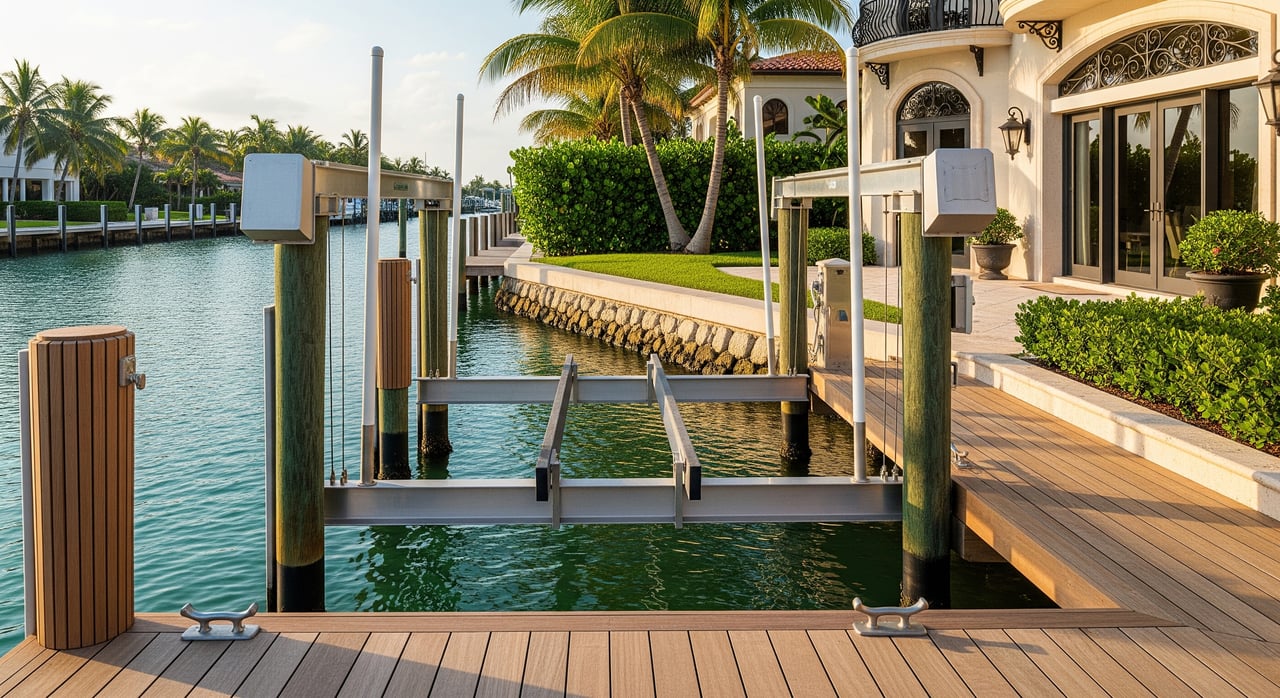
- Fixed docks and piling-supported piers: Often cost-effective and stable where tidal swing is limited. Susceptible to storm forces if not engineered for local conditions.
- Floating docks with guide piles: Rise and fall with tides and help maintain consistent boarding height.
- Boat lifts: Hydraulic, cable, or pneumatic systems keep hulls out of the water and reduce fouling. Lifts require adequate pilings, electrical service, and routine maintenance.
- Davits and personal watercraft lifts: Useful for smaller boats and PWC, with comparatively lighter infrastructure.
Engineering and hurricane readiness
For substantial new installations or upgrades, require stamped plans from a Florida-licensed engineer experienced in marine structures. Design should account for wind, wave, and uplift forces common in the region.
Use corrosion-resistant hardware and marine-grade materials. Electrical components for lifts and dock receptacles must meet applicable codes for marine environments and pass local inspection.
Maintenance and lifecycle
Plan for seasonal or annual service on lifts, periodic tightening or replacement of cables, and routine checks of pilings and fasteners. Saltwater accelerates wear, so a proactive maintenance plan is essential. Ask for transferable warranties and a service history from the seller.
Choosing a marine contractor
A strong contractor streamlines permitting, engineering, and construction while protecting your timeline and budget.
Credentials to verify
- Proper Florida licensing for marine or specialty work.
- General liability and workers’ compensation insurance, with coverage details in writing.
- Demonstrated permitting experience with the Town of Manalapan, county, FDEP, and USACE.
- Recent Palm Beach County references and a portfolio of comparable projects.
- A partnership with a licensed structural or marine engineer for stamped plans and inspections.
Questions to ask
- Will you obtain all required permits, and which are included in your quote?
- Who prepares and signs the engineering drawings?
- What is the anticipated permitting and construction timeline, including any seasonal limits?
- What exactly is included in the bid, including electrical, commissioning, and testing?
- What warranties do you provide, and are they transferable?
- How do you handle unforeseen site conditions such as rock or old submerged pilings?
Due diligence and timeline
A disciplined process keeps surprises out of your closing.
First steps when you like a property
- Request all dock, lift, and seawall permits, as-builts, and maintenance records.
- Add contract contingencies for marine inspections and permit verification.
- Order a specialized waterfront inspection, including the seawall and lift.
- Confirm permit history with the Town of Manalapan and other relevant agencies.
Typical timelines
- Document review and town checks: 1 to 2 weeks.
- Waterfront inspection and seawall certification: 1 to 3 weeks.
- New permits for a dock, lift, or dredging: often 3 to 6 months, complex cases 6 to 12 months or more.
- Construction after permits: a few weeks to several months, depending on scope and access.
Budget considerations
- Local permit fees are modest compared with design, engineering, and construction costs.
- Lift size, materials, pile depth, and equipment access drive pricing. Sites with rock or deep water tend to cost more.
- Set aside funds for ongoing maintenance, lift service, and periodic seawall work.
Red flags to investigate
- No permits for the existing dock, lift, or seawall, or gaps in documentation.
- Repeated emergency repairs without permitted reconstruction.
- A dock that appears to exceed typical allowances without supporting approvals.
- Recorded notices of violations or unresolved neighbor disputes over riparian lines.
- Evidence of seagrass or mangrove impacts without mitigation documentation.
How dockage shapes your purchase
Your boating plans should guide the offer strategy and timeline. If the existing dock meets your needs and is fully permitted, you can focus on maintenance and insurance. If upgrades or dredging are required, factor permit lead times into contingencies and pricing.
When you approach due diligence with a clear framework, you reduce risk, protect value, and step into the right waterfront lifestyle on day one. If you want help matching your boating profile to the right lot, lift, and route to open water, reach out for a tailored plan.
Ready to navigate Manalapan dockage with confidence? Connect with Adam Levitt for a clear, data-driven path from offer to on-the-water.
FAQs
What should I check first about a Manalapan dock?
- Verify permits and as-builts, confirm seawall condition, and measure usable depth at mean low water to ensure your boat and route will work.
Who permits new docks and lifts in Manalapan?
- Local approvals come through the Town of Manalapan, with possible reviews by FDEP, SFWMD, and the USACE depending on scope and location.
How long do dock or lift permits take?
- Straightforward local projects can be weeks to a few months, while work requiring state or federal review or mitigation can run several months to a year.
Can I transfer dock permits when I buy the home?
- Often yes, but you must confirm with the issuing authority, including any conditions for sovereign submerged lands authorizations.
Do I need a permit to dredge my slip deeper?
- Likely yes, since dredging typically triggers state and federal permits and environmental review.
Will insurance and lenders care about dock permits?
- Yes, many lenders and insurers require evidence that seawalls and dock structures meet code and are permitted, which can affect financing and premiums.